
An air purifier should make a room feel fresher, so a new or unpleasant smell can be confusing. The cause may be harmless, such as packaging odour from a new filter, but it can also point to trapped moisture, an overdue filter, nearby pollution, or an electrical problem. The safest response is to identify the smell, switch the unit off when anything seems abnormal, and follow the manufacturer’s cleaning and replacement instructions.
Is a New-Air-Purifier Smell Normal?
A mild plastic, adhesive, or “new appliance” scent can occur during the first hours of use. New filters and internal components may release a temporary manufacturing odour. Remove all protective plastic, confirm that the filter is installed in the correct direction, and operate the purifier in a ventilated room. The smell should steadily fade rather than become stronger.
If the odour causes irritation, persists for several days, or resembles burning insulation, stop using the appliance and contact the supplier. Never assume that a strong chemical or electrical smell is part of normal break-in.
Common Smells and What They May Mean
| Smell | Possible cause | First response |
|---|---|---|
| Dusty or stale | Loaded prefilter or old filter | Inspect and maintain the filters |
| Musty | Moisture, mold nearby, or a damp filter | Turn off, locate moisture, and dry the area |
| Cooking or smoke | Odour captured by carbon media | Remove source and consider filter replacement |
| Burning or hot plastic | Electrical or motor fault | Unplug immediately and request service |
Why an Old Filter Can Start to Smell
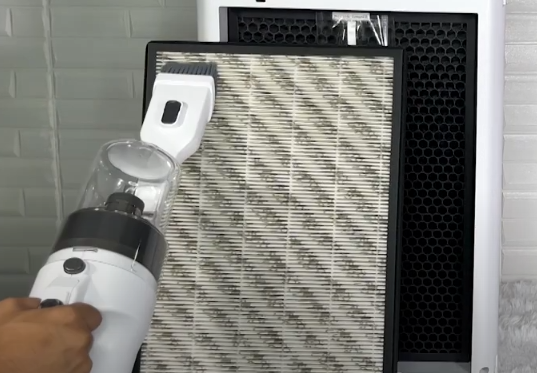
Filters collect dust, hair, fine particles, droplets, and odour-producing compounds. When the media becomes loaded, airflow falls and previously captured smells may become noticeable. Activated-carbon filters also have a limited adsorption capacity. Once saturated, they cannot continue holding the same amount of gaseous pollution.
Check the filter indicator, but do not rely on it alone. Many indicators are timers rather than direct measurements of filter condition. Homes near traffic, construction, cooking smoke, pets, or frequent candle use may require earlier replacement. Use only a filter specified for the model and reset the indicator after installation.
Can Humidity Make an Air Purifier Smell Musty?
Yes. Philippine humidity can keep dust and filter material damp, particularly when a purifier sits near an open window, bathroom, laundry area, or air-conditioner condensation. A purifier is not designed to process liquid water. If the filter becomes wet, turn the unit off and follow the manual; some filters must be replaced rather than washed.
Control the moisture source with ventilation, leak repair, and an appropriately sized dehumidifier. Do not spray fragrance, disinfectant, or water into the air inlet. These products can coat the sensor and filter and may create additional emissions.
Why Cooking and Smoke Odours Return
An air purifier can reduce airborne particles and, when it has sufficient carbon, some odours. It cannot replace a range hood that vents outdoors or eliminate residue already deposited on walls, curtains, and furniture. Frying and grilling generate both particles and gases, so source control is essential.
- Use kitchen exhaust during cooking and for several minutes afterward.
- Keep the purifier away from direct grease and steam.
- Clean nearby surfaces where cooking residue accumulates.
- Run the purifier at a higher speed after cooking when appropriate.
When to Stop Using the Purifier
Unplug the unit if you notice a burning smell, smoke, unusual heat, repeated electrical noise, a damaged cord, or liquid entering the appliance. Move people away from the immediate area if smoke is present. Do not open electrical components or attempt repairs unless you are qualified and the manufacturer permits it.
A sharp smell sometimes described as metallic or ozone-like also deserves attention. Verify which technology the appliance uses and whether every optional function is intended for occupied spaces. Operate any UV Care air purifier strictly according to its manual and safety guidance.
How to Clean an Air Purifier Safely
- Turn the purifier off and unplug it.
- Move it to a clean, dry work area.
- Remove loose dust from washable prefilters only when the manual allows washing.
- Never wash a HEPA or carbon filter unless it is specifically labelled washable.
- Wipe the exterior and air grilles with a soft, slightly damp cloth.
- Allow washable parts to dry completely before reassembly.
- Keep the intake and clean-air outlet unobstructed.
How to Prevent Odours From Returning
Place the purifier where air can circulate, not behind a sofa or directly against a wall. Vacuum surrounding floors and soft furnishings regularly so the purifier is not the only dust-control measure. Address leaks and high humidity promptly, avoid indoor smoking, and limit candles and aerosol products.
Record the installation date of each filter. A simple maintenance log helps distinguish a recurring room source from an appliance problem and prevents forgotten replacements.
Frequently Asked Questions
Can I spray air freshener on the filter?
No. Fragrance and cleaning sprays can damage filter media, contaminate sensors, and introduce compounds the purifier must then remove.
Why does the smell appear only on high speed?
Higher airflow can make trapped odours more noticeable or draw pollution from another part of the room. Inspect the filter and nearby sources.
Should a HEPA filter be washed?
Most true HEPA filters should not be washed. Water can damage the fibres and reduce performance. Follow the model-specific manual.
Can an air purifier remove every smell?
No. Particle filtration and gas adsorption have limits. Strong or continuous odours require source removal and ventilation.
A Fresh-Smelling Purifier Starts With Source Control
Most purifier odours can be traced to a new component, a loaded filter, moisture, or pollution in the room. Identify the smell, maintain the device correctly, and fix the source instead of masking it. If the odour is electrical, persistent, or accompanied by heat or smoke, stop using the unit and arrange professional inspection.