
A dehumidifier removes moisture from indoor air, while an air purifier removes certain airborne particles or gases depending on its filtration system. Choose a dehumidifier for persistent dampness, condensation, or excessive relative humidity. Choose an air purifier when the priority is reducing airborne particles such as dust, pollen, smoke, or fine particulate matter.
The two appliances are not substitutes. They address different parts of an indoor-air problem, and some homes may benefit from both after moisture sources, ventilation, and housekeeping have been addressed.
What does a dehumidifier do?
A refrigerant dehumidifier draws moist air across a cold coil. Water vapor condenses into liquid, which collects in a tank or flows through a drain, and the drier air returns to the room. Desiccant models use a moisture-attracting material and may perform differently at lower temperatures.
The relevant performance measure is moisture extraction, commonly expressed in liters per day under specified test conditions. Actual removal depends on room temperature, relative humidity, air movement, and new moisture entering the room.
A dehumidifier is most appropriate when you observe high hygrometer readings, condensation, slow-drying laundry, damp cabinets, or recurring musty odors. It can help manage moisture but cannot repair roof leaks, plumbing failures, or groundwater intrusion.
What does an air purifier do?
An air purifier circulates room air through one or more treatment stages. A particle filter can capture airborne material, while activated carbon may reduce some odors and gases. Performance depends on the filter, airflow, room size, operating speed, placement, and maintenance.
For particles, review the Clean Air Delivery Rate, or CADR, when it is available. CADR combines filtration efficiency with airflow and indicates how quickly a purifier supplies filtered air for a particular particle category. A device with an excellent filter but very low airflow may clean a room slowly.
Air purifiers do not remove settled dust until it becomes airborne, and ordinary particle filters do not reduce humidity. They should supplement source control and ventilation, not replace them.
Which appliance helps with mold?
A dehumidifier helps prevent conditions that allow mold to grow by lowering relative humidity. An air purifier with an appropriate particle filter may capture some airborne spores, but it does not remove mold growing on walls, ceilings, furniture, or hidden materials.
For a mold problem, the correct sequence is to stop the moisture source, dry the area, remove or clean affected materials safely, and control future humidity. Filtration can be an additional measure, particularly during professional remediation, but it is not the main cure.
Which appliance helps with allergies?
An air purifier may reduce airborne allergens that pass through the unit, including pollen, pet dander fragments, and some dust. Results depend on the source, room, filter, and exposure pattern. Bedding, upholstery, carpets, pets, outdoor air, and cleaning practices may contribute more allergens than one portable device can manage.
High humidity can support dust mites and mold, so a dehumidifier may indirectly help when moisture is part of the trigger. It does not filter allergens from the air. Medical symptoms require professional assessment; appliances should not be presented as treatments or cures.
How do the two appliances compare?
| Household concern | Dehumidifier | Air purifier |
|---|---|---|
| High relative humidity | Primary solution | Does not reduce it |
| Window condensation | Can help | Does not directly help |
| Airborne dust or pollen | Does not filter effectively | Can reduce particles with suitable filtration |
| Smoke particles | Does not remove them | Particle filtration may help |
| Gaseous odors | May reduce damp odors indirectly | Activated carbon may help with some gases |
| Existing mold growth | Does not remove it | Does not remove growth on surfaces |
| Indoor laundry | Speeds moisture removal | Does not dry the air |
When should you use both?
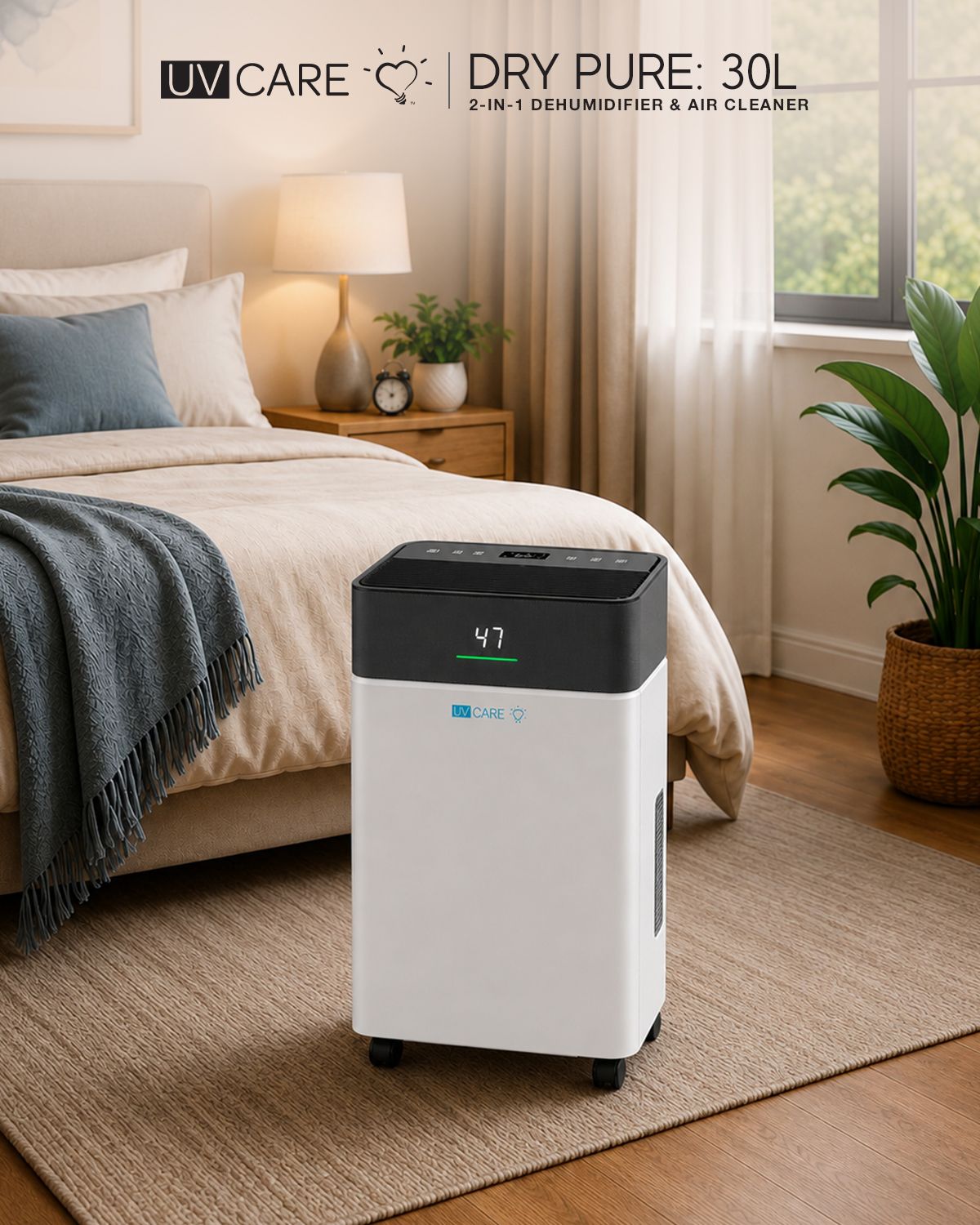
Using both may be reasonable in a humid bedroom with airborne allergens, a condominium affected by outdoor fine particles, or a home drying laundry indoors during the rainy season. The dehumidifier manages moisture, while the purifier circulates and filters air.
Avoid placing the appliances so their airflow interferes with each other. Follow clearance instructions, keep doors and windows controlled, and use a hygrometer to prevent over-drying. Replace or clean filters on schedule and sanitize the dehumidifier tank to prevent microbial buildup.
How should you choose between them?
Begin with evidence. Measure humidity for several days. Identify when odors, condensation, dust, or symptoms occur. Check for leaks, smoking, cooking emissions, pets, renovation dust, and outdoor pollution entry points.
Choose a dehumidifier when measured moisture is the main problem. Choose an air purifier when airborne particles are the main concern. If both conditions are present, prioritize source control first, then size each appliance for the actual room rather than relying on broad labels such as “whole home.”
For an air purifier, compare CADR, filter replacement availability, noise, power use, and room coverage at the intended fan speed. For a dehumidifier, compare extraction conditions, humidistat accuracy, drainage, tank capacity, noise, and operation at the room’s typical temperature.
Frequently asked questions
Is an air purifier or dehumidifier better for a musty room?
A dehumidifier is usually more relevant when the musty smell comes from dampness. Find and correct the moisture source. An air purifier may reduce some airborne particles or odors but will not dry the room.
Can I operate both appliances overnight?
Yes, if their manuals allow unattended or overnight operation and each unit has adequate clearance. Consider noise, electrical load, filter condition, tank capacity, and automatic shutoff.
Does a HEPA filter remove humidity?
No. A HEPA filter captures particles; it does not remove water vapor from the air.
Will a dehumidifier remove smoke?
No. Smoke contains particles and gases. Appropriate filtration, ventilation when outdoor conditions permit, and removal of the smoke source are more relevant.
Which device is better during the rainy season?
The answer depends on the measured problem. A dehumidifier is useful for excessive moisture; an air purifier is useful for airborne particles. Rain alone does not determine the correct appliance.